For rentals and small businesses · Built by a CPA · No bank linking
Real books for your rentals and your business.
If you run a rental or a small business of your own, you know the split-screen problem. Personal money in one app, business money in another, and no single number that tells the whole truth. Marked Money keeps real books for all of it: personal, rental, business. One place, rolling into one net worth you can actually stand behind.
No bank linking. Bring your whole history. Export it anytime.
What a separate set of books gets you
Real books, not a category called “Business.”
Each rental and each business gets its own set of books, and its own pass through the week. That is more time than one big pile, and it is why each one’s numbers actually hold.
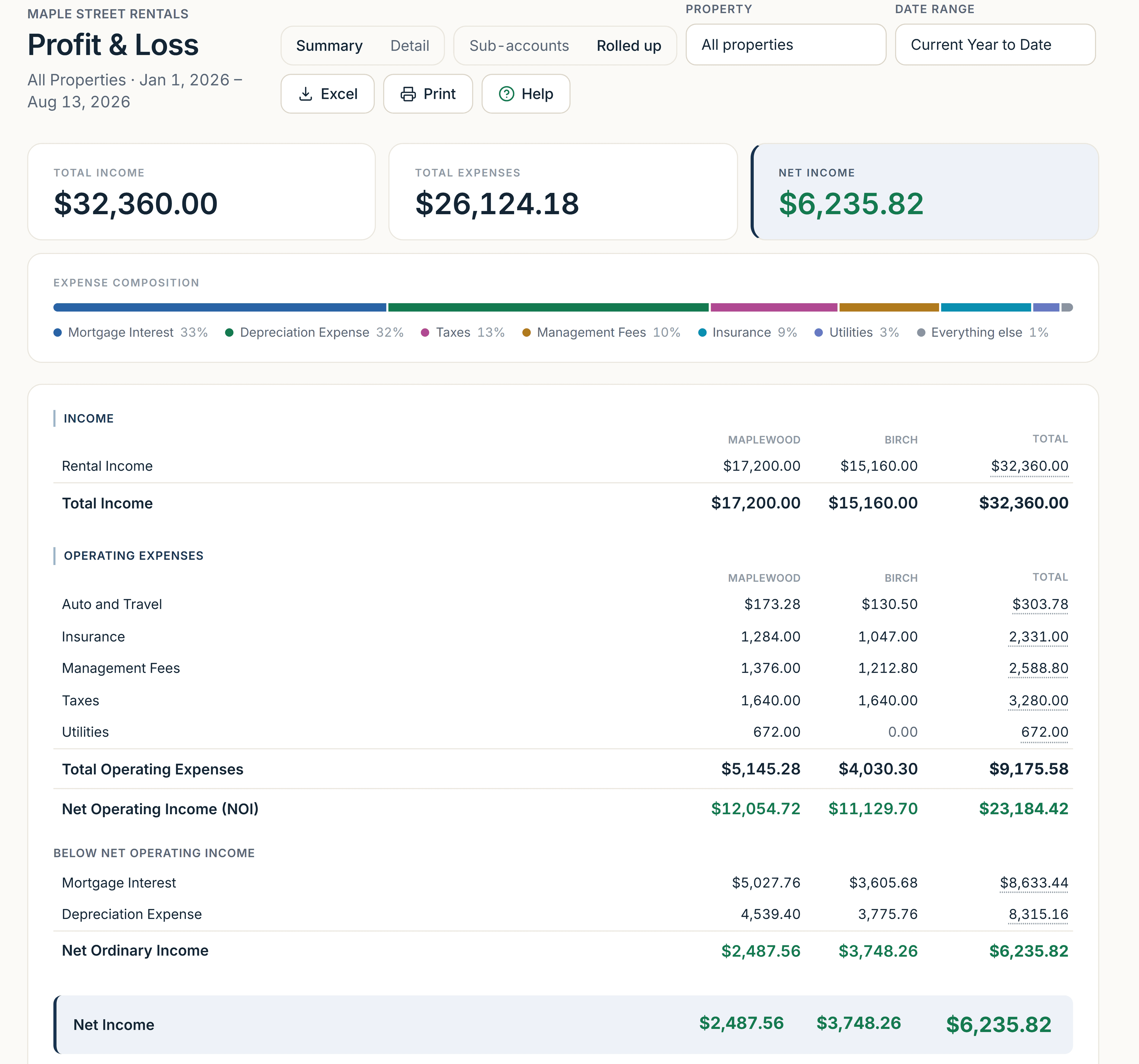
Every property tells its own story.
One set of accounts, and still a full statement for each property. You see the building that earns and the one that doesn’t.
Airbnb, VRBO, direct. You’ll know which one actually pays.
A reservation is recorded like a paycheck: the guest, the dates, the nights, and every line off the payout report. So you get real occupancy for any month you ask for, and what each channel nets after its own fees, from your own books instead of a dashboard’s estimate.
A transfer between your books isn’t income, either.
Move money home from the business, or put money into a rental. One guided step records it in both sets of books at once, and nothing double-counts as money you earned or spent.
One net worth that adds up the way an accountant would add it.
Each business contributes its real result, not its deposits as “income” and its card swipes as “spending.”

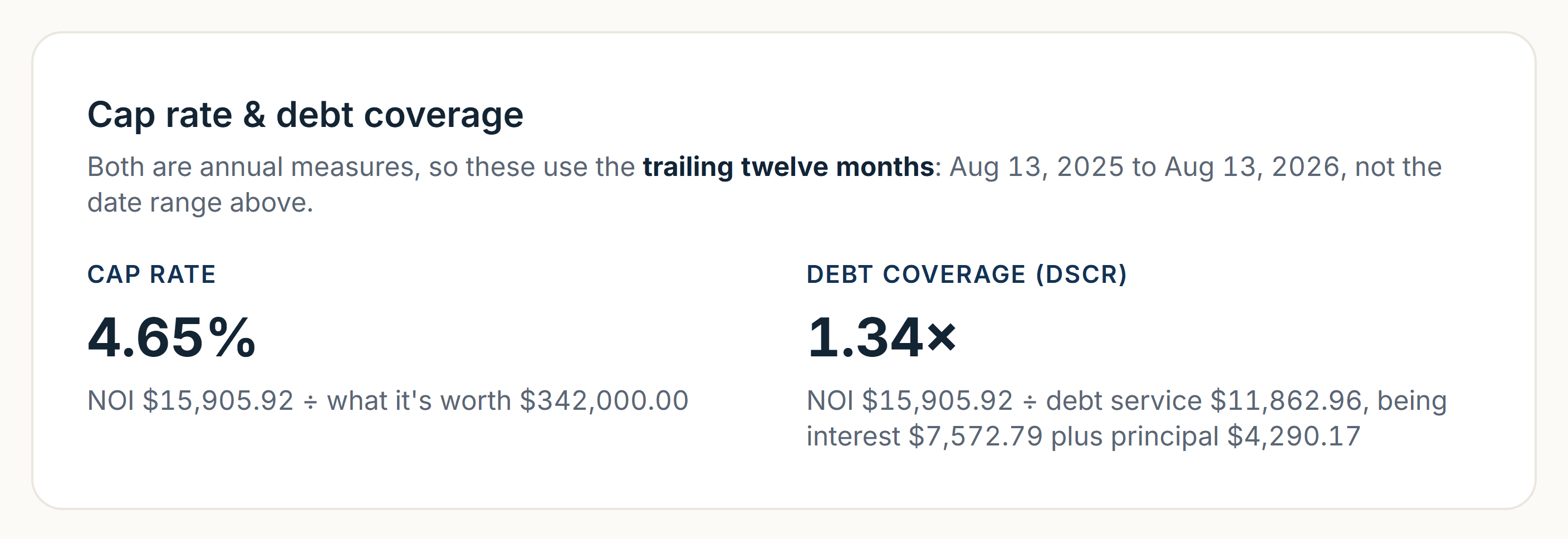
Cap rate and debt coverage, worked out from the books
The two numbers a lender or a buyer asks for first. Both are annual, so both are taken over the trailing twelve months rather than whatever range you were just looking at, and each one shows the figures behind it: what the property earns after operating costs, what it is worth, and what the debt on it actually costs in interest and principal. Nothing is typed in for them.
Try it without signing upFinished books for a household, three rentals, a design studio and a house-flipping company. View only, so click anything.
Adding one takes about a minute
Your Books, then Add a business or rental. Pick which kind, pick a starting chart of accounts shaped for that work, name it, and you land inside the new set of books. A guided walkthrough points at each step on the real screen while you do it, and money moving between your books is one entry under Transactions.
One net worth, with everything you run inside it.
Set up your personal books first, then add a rental or a business from the same screen. What each one earns and what it’s worth show up in your personal picture automatically. Free during the beta. The first 100 accounts lock in their founding-member price and keep it.
Free during beta · No bank linking · Export anytime